
Rirkrit Tiravanija Invites Us In
2026-05-30
Russell Storer
Rirkrit Tiravanija once said that ‘I always thought that a lot of my work was about film, even though I never turned on the camera.’[1] He positioned this statement in relation to the central concern of his work: the passing of time—how time is spent, and how we gather and do things together within it. Many of Tiravanija’s projects frame situations within a specific space and time, in which he sets up conditions for audiences to meet, share food, talk, and/or rest; from there, he lets the activities and rituals take their own course, in the quiet spirit of a gift given without expectation. The traces of these events—used cooking utensils, gas burners, empty food packaging, for example—are often displayed as documentation of an action that does not play out on a screen but is conjured instead in our minds. His works in some ways make me think of Andy Warhol’s durational films, in which Warhol just pointed his camera and let the action unfold before it, be it a sleeping John Giorno, an out-of-shot (or occasionally in-shot) sex act, or Factory denizens gossiping, cutting their hair, smoking, and flirting. Tiravanija, drawing on his Thai cultural background, considers art inseparable from life. His work puts into place simple parameters to create a space for collective being, at once constructed and freeform, public and private. As he says of social relations in Thailand, ‘The spatial value of public and private are [neither] assigned nor given . . . We enter into the spaces of otherness without feeling the others apart, but rather we enter into togetherness.’[2]
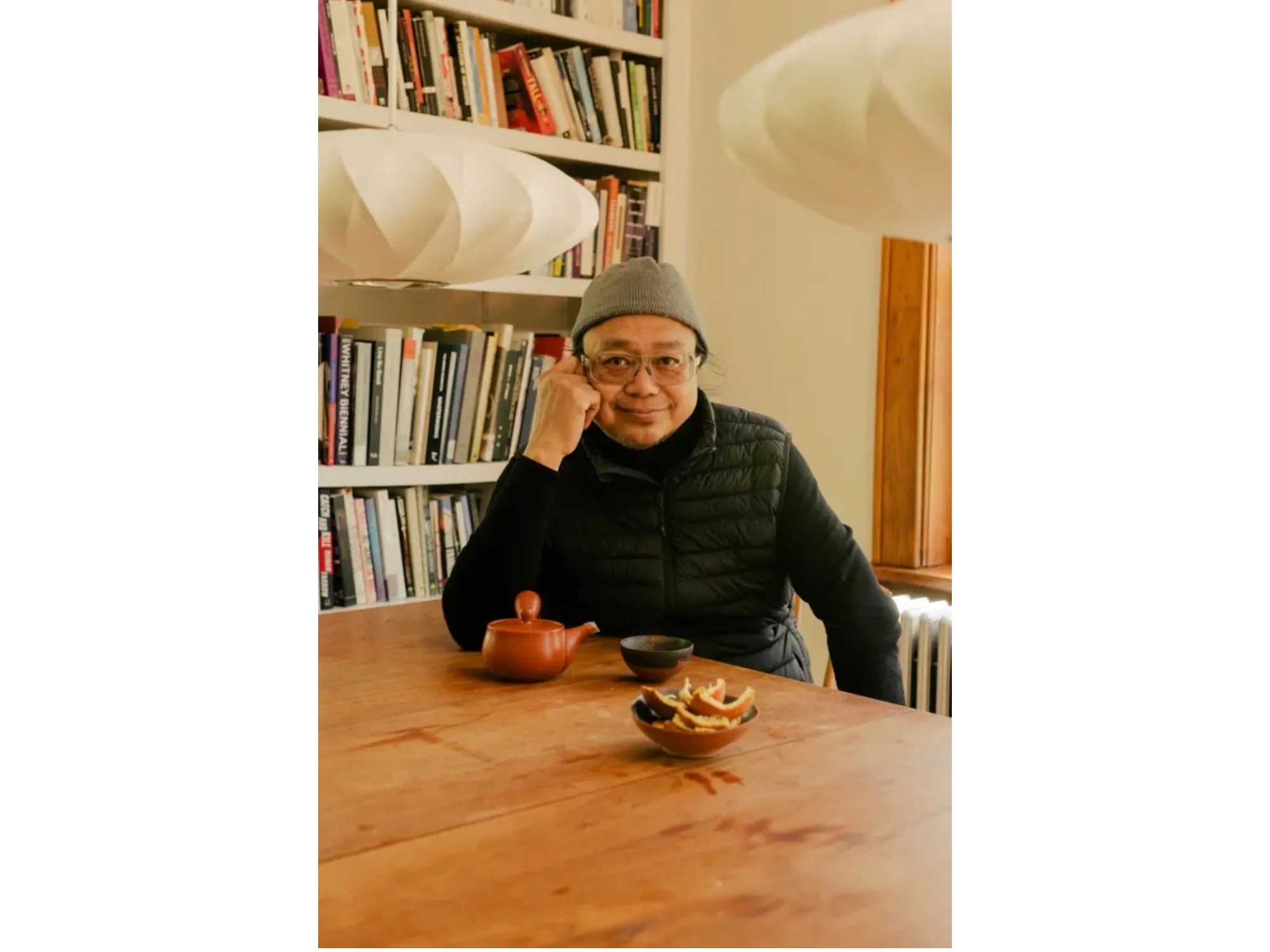
Portrait of Rirkrit Tiravanija, 2021. Photo by Daniel Dorsa, courtesy of the artist and David Zwirner
Space is the theme of this year’s AAGFF, and Tiravanija is present across multiple spaces in and around the M+ Cinema. In each, we experience his playfully subversive transformations of the regulated zones of the art museum into new sites for interaction. In the Main Hall, we encounter his two ping-pong tables, untitled 2026 (honey in rocks water in stones), where anyone can pick up a paddle and ball to play a game. The title, containing phrases from the Judeo-Christian Book of Deuteronomy, references the divine provision of joy and sustenance in barren places. Here, in the cavernous public zone of M+, you can choose your own rules and play for as long as you like, performing for the passing crowd and filling the air with the sound of bouncing ping-pong balls. On the windows behind, at the Cinema entrance, Tiravanija’s text work untitled 2026 (do we dream under the same sky) is displayed in Chinese and English and in red and white, the colours of the Hong Kong flag. Both unity and difference are present in this simple, evocative statement, which poses a rhetorical question that prompts many others: Where do we stand? Can both exist simultaneously? Within a shared space—a museum, a community, a city, a country—is there room for our own dreams?
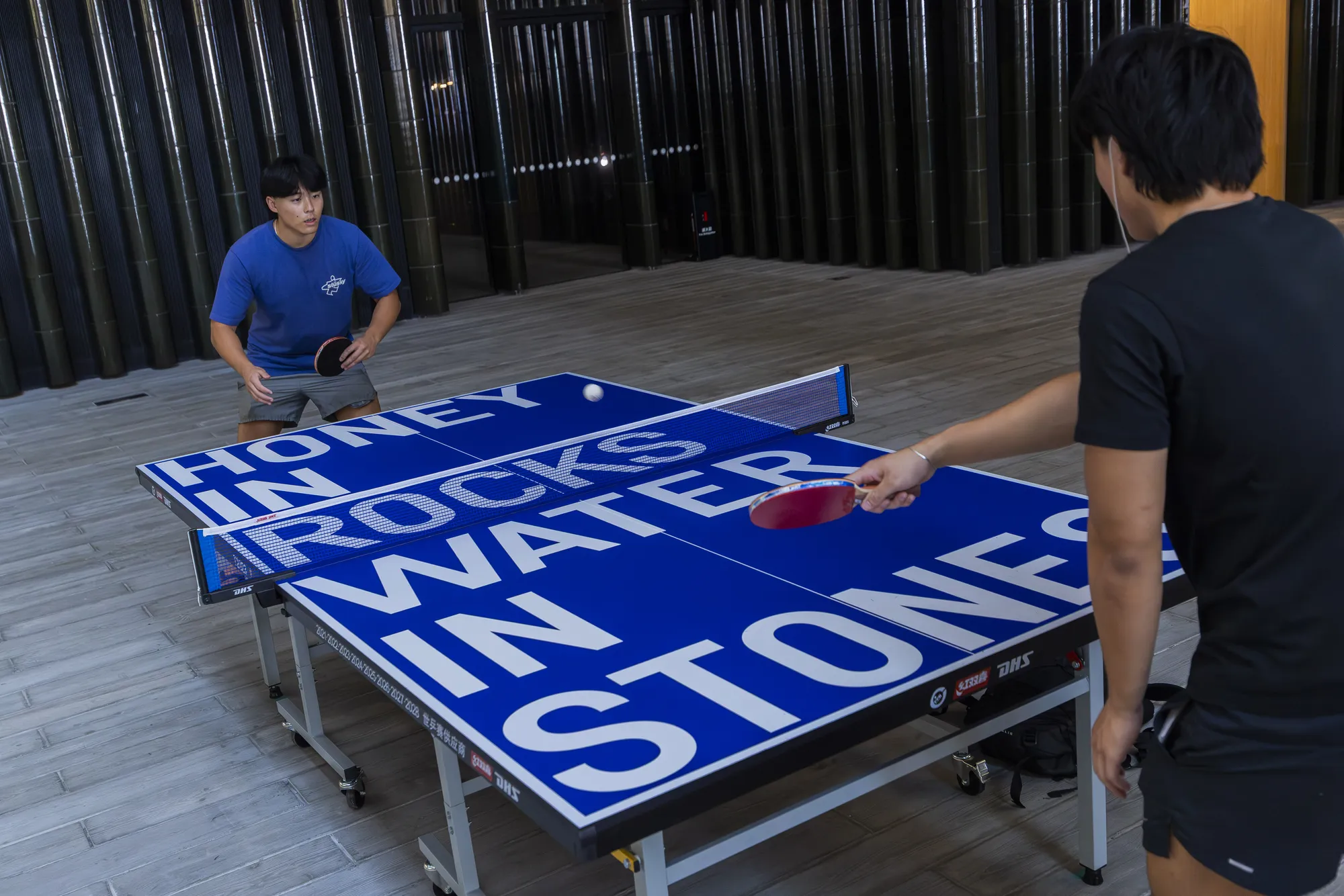
Rirkrit Tiravanija. untitled 2026 (honey in rocks water in stones) in the Main Hall, M+, 2026. © Rirkrit Tiravanija. Photo: Jeff Cheng Tsz Fung, M+, Hong Kong
At times, Tiravanija has indeed turned on his camera to produce reflective moving image works that extend his interest in framing and capturing social activities and exchanges over a specific period. These include recordings of everyday undertakings such as making and eating curry in Thailand or labskaus (a local beef and vegetable dish) in Germany; ten hours of performance footage of John Giorno (double the length of Warhol’s Sleep); and videos of the artist himself reciting the word ‘boom’, displayed on two facing screens set so close together that they echo in an intimate dialogue. The Festival will feature two of Tiravanija’s film works: his 2005 collaboration with Philippe Parreno, Stories are Propaganda, and his 2011 feature film Lung Neaw Visits His Neighbours. The former, which was shot in Guangzhou, is constructed as a series of short, disconnected scenes. The artists evoke a changing landscape by interspersing poetic fragments of nature with belching smokestacks and piles of rubbish, followed by surreal scenes such as a snowman made of sand, performing magicians, and an albino rabbit in a puddle. The film is overlaid with a child narrating a blend of personal memories, historical references, and philosophical reflections, creating a strange, melancholic document of a transient world. It shimmers with an eerie golden light, constructing a space of ghostly situations as if viewed in the rear-view mirror. As the voiceover states, ‘It’s hard to think about the present because the past always glows.’
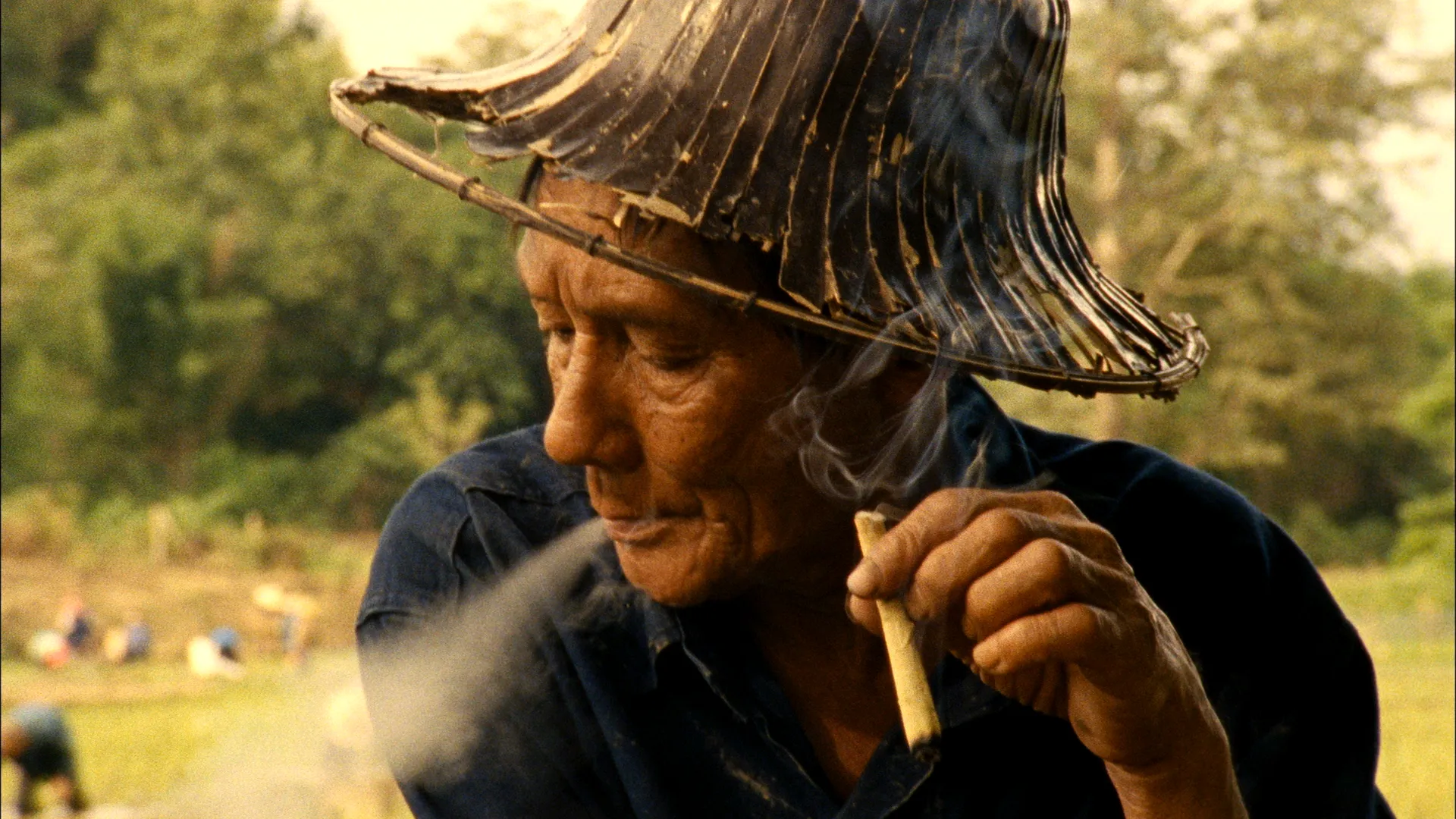
Rirkrit Tiravanija. Lung Neaw Visits His Neighbours, 2011. Photo: Courtesy of the artist
Lung Neaw Visits His Neighbours feels closer in spirit to Tiravanija’s participatory works and videos, in which a space is constructed to foster awareness of ordinary actions and interactions. The film focuses on the rice farmer Lung Neaw as he lives in his village home near Chiang Mai after retiring from full-time labour. Without dialogue, we follow him as he wanders the night market, prays, bathes in the river, smokes a cigarette, and visits his neighbours and relatives. The work provides no judgement, direction, or commentary on what we are seeing; we simply spend time with Lung Neaw as he goes about his business. It is a love letter to the simple life, imbued with the Buddhist conception of acceptance, and a powerful reminder of the importance of allowing space to be fully, openly together with others.
Russell Storer is Senior Curator and Associate Director of Curatorial Affairs at M+.
[1] Rirkrit Tiravanija, press conference at the 68th Venice Film Festival 2011, accessed at https://www.youtube.com/watch?v=OuPdEioXofg on 22 May 2026
[2] Rirkrit Tiravanija, in conversation with Susie Wong, ‘Dreaming under the same sky: A Conversation with Rirkrit Tiravanija’, Issue Arts Journal, Issue 06, 2017, p. 57.