
Hidden Agendas
2026-04-13
By Aaina Bhargava
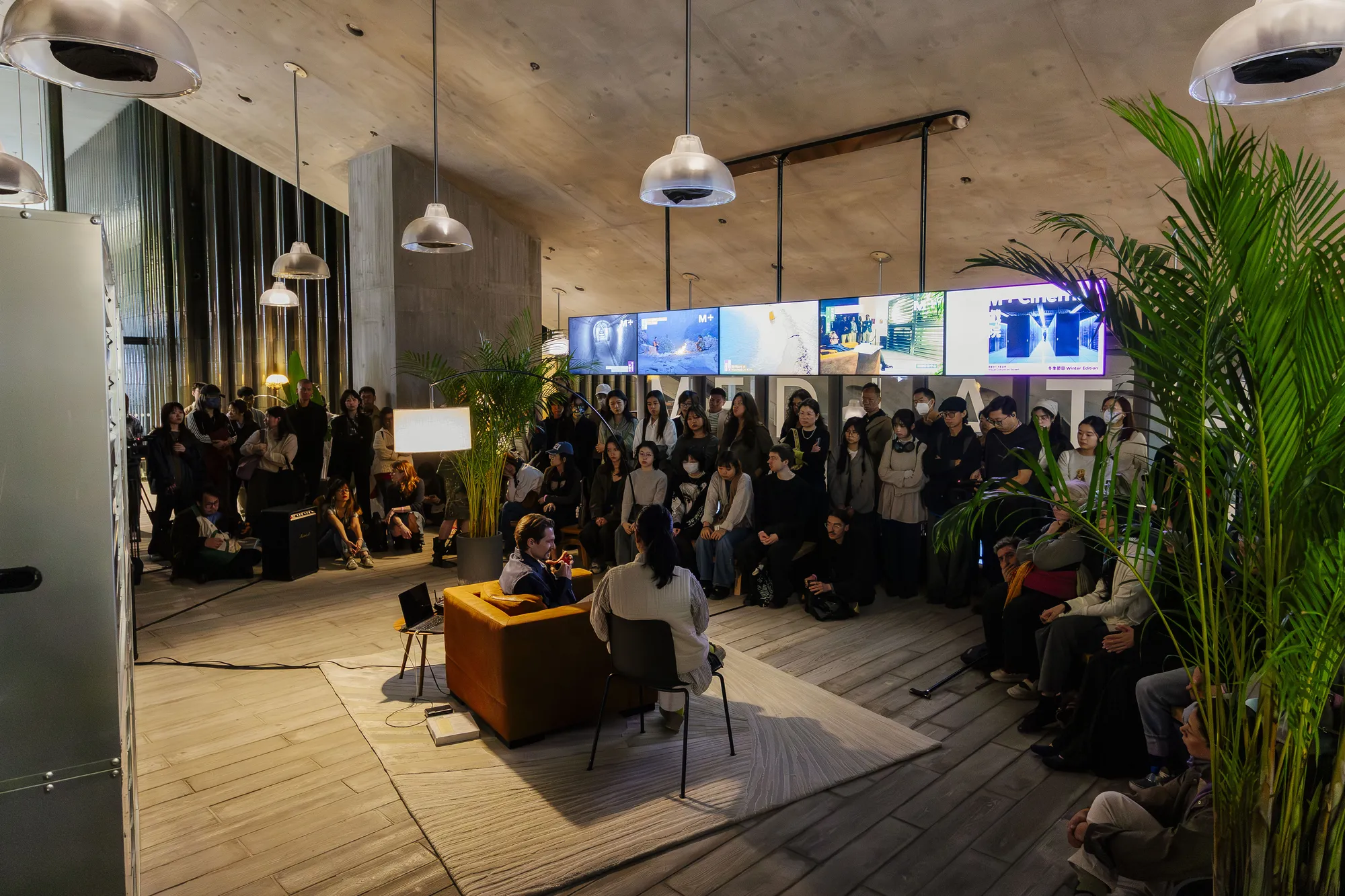
Photo: Jeff Cheng Tsz Fung
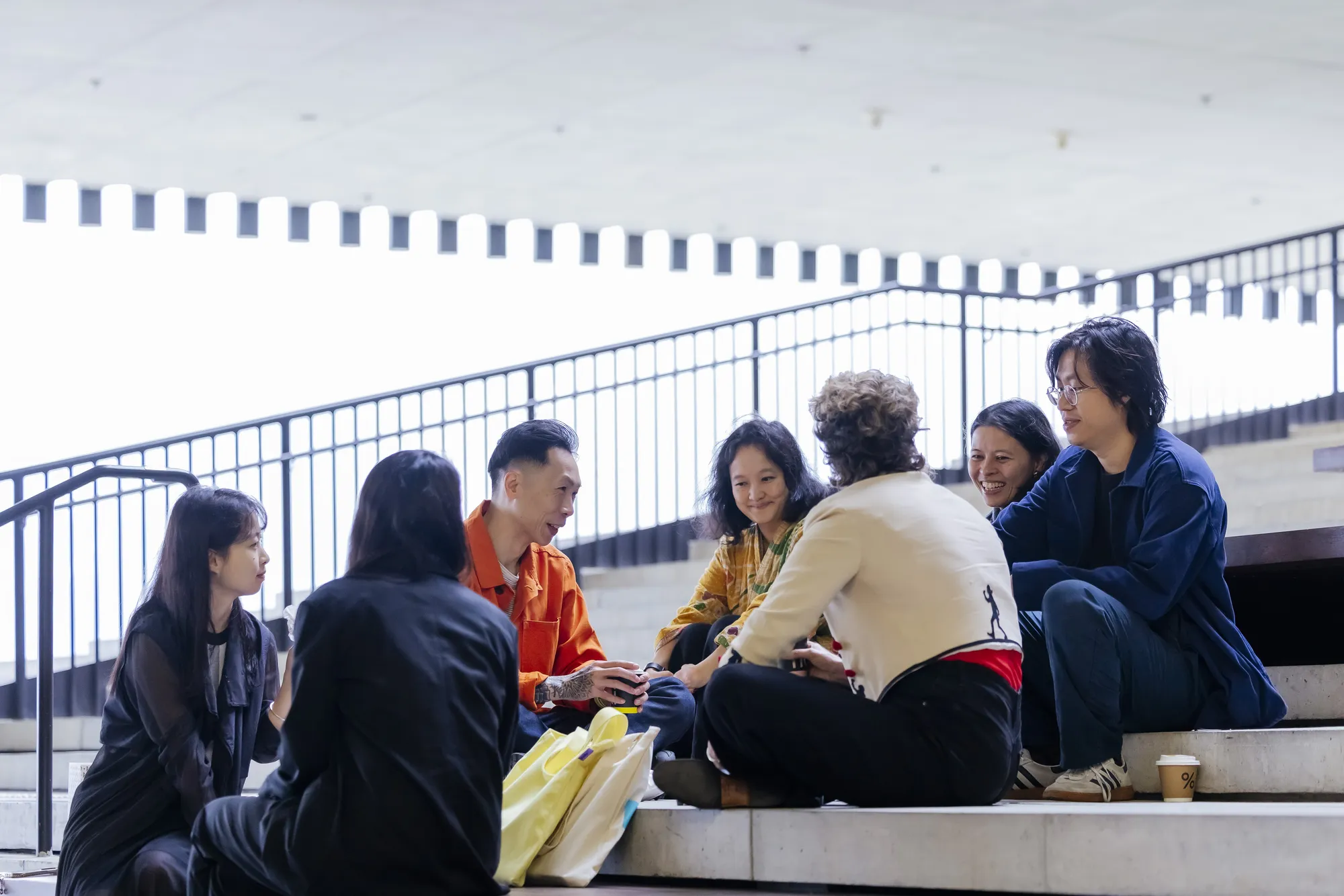
Photo: Jeff Cheng Tsz Fung
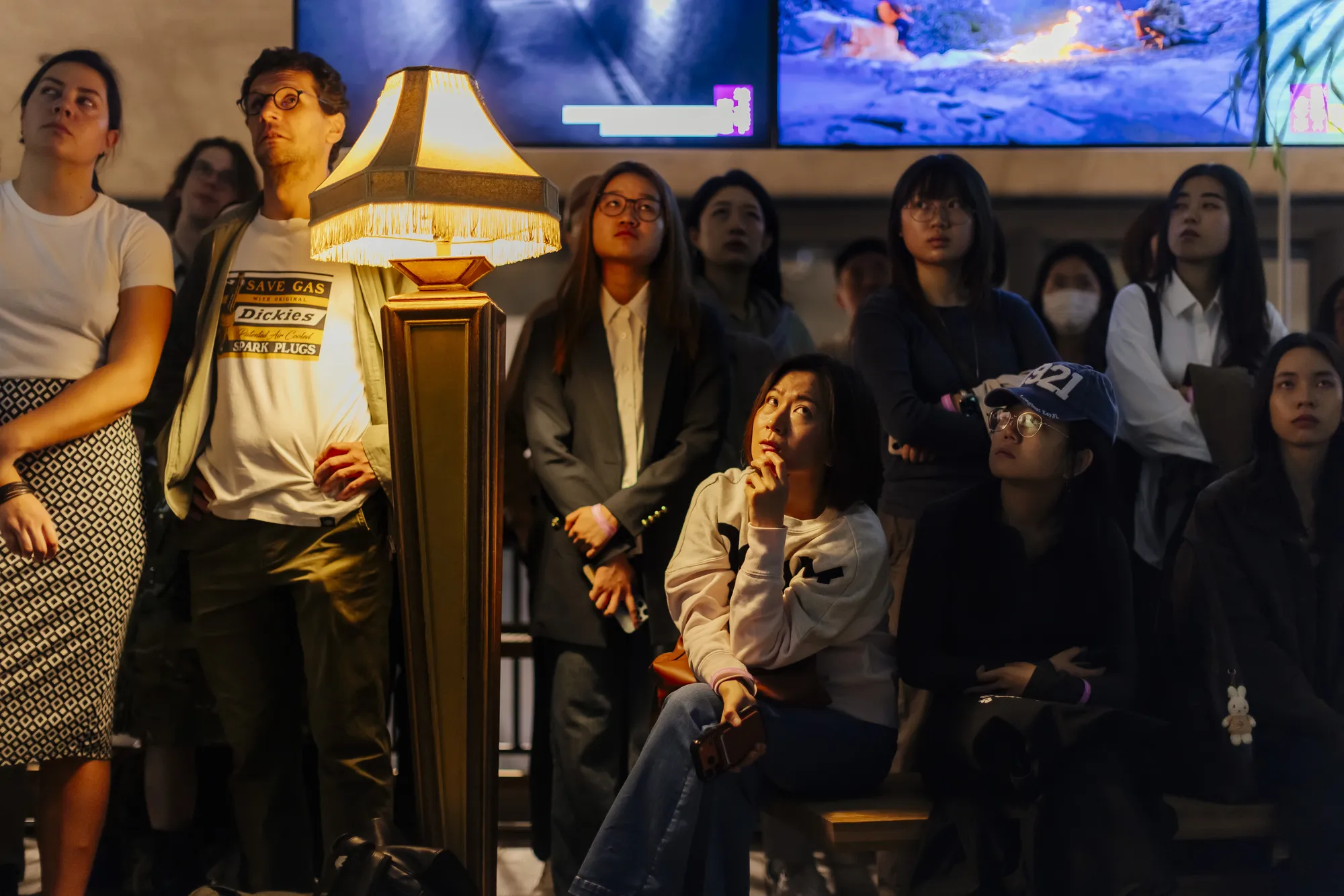
Photo: Jeff Cheng Tsz Fung
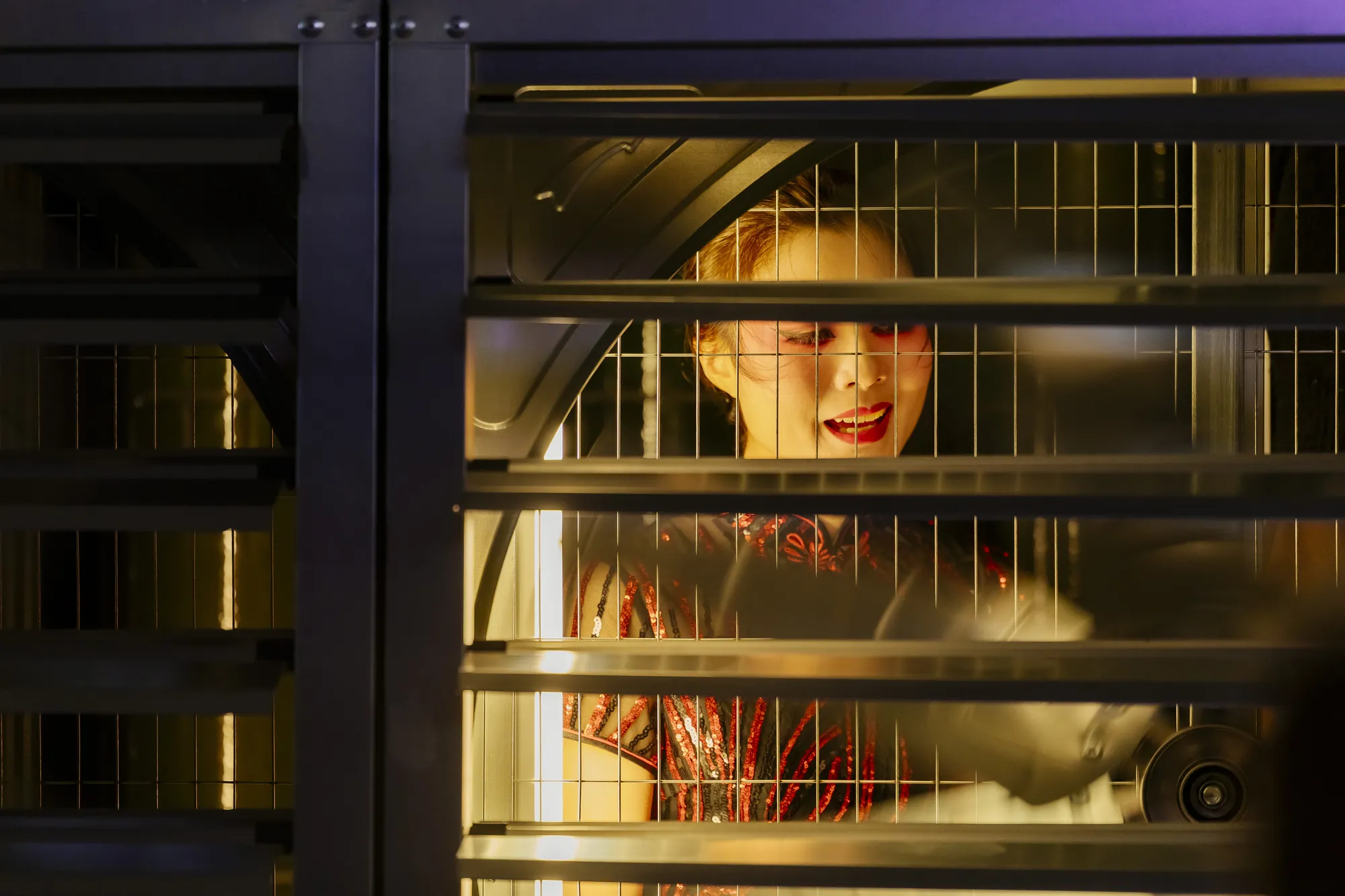
Photo: Jeff Cheng Tsz Fung
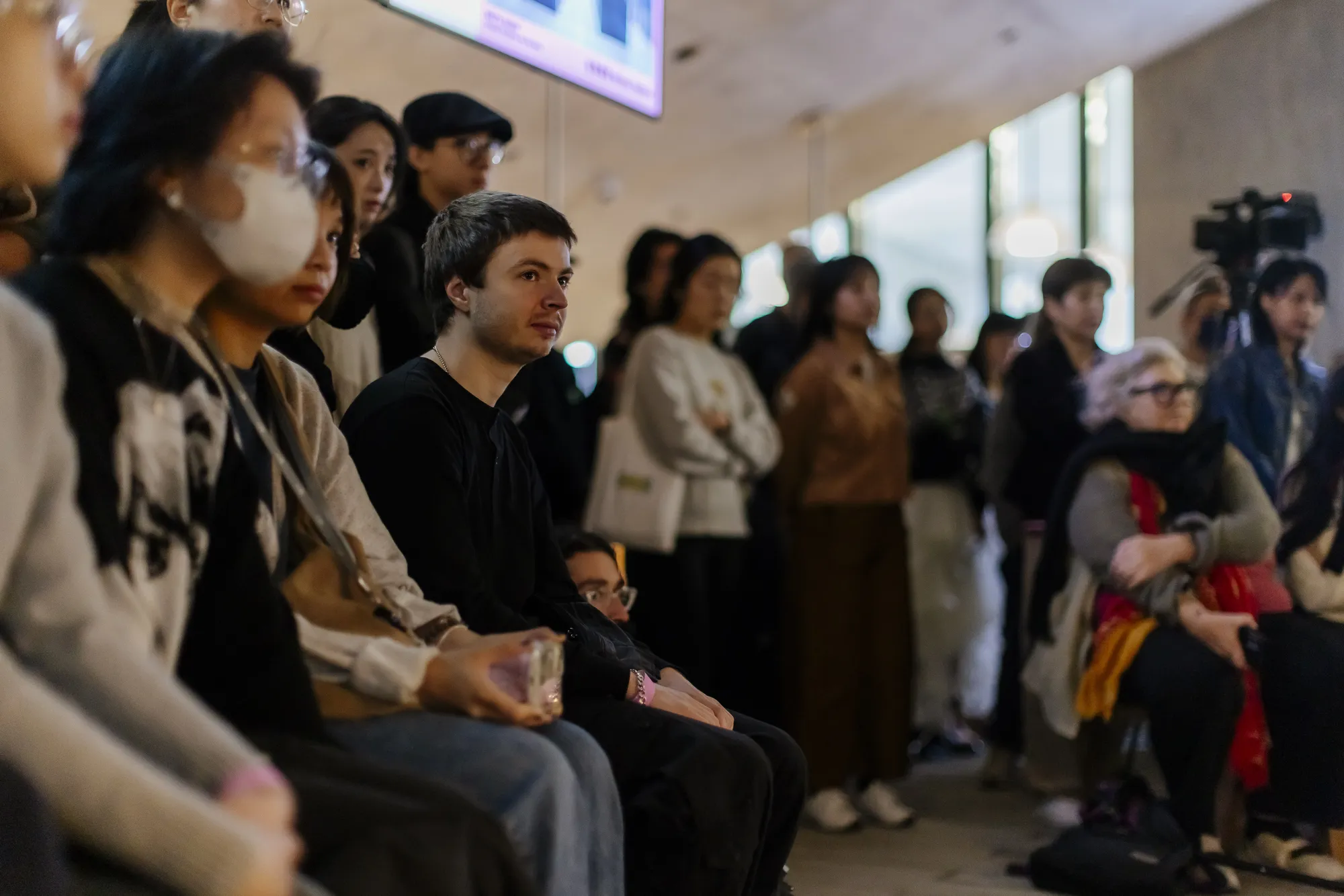
Photo: Jeff Cheng Tsz Fung
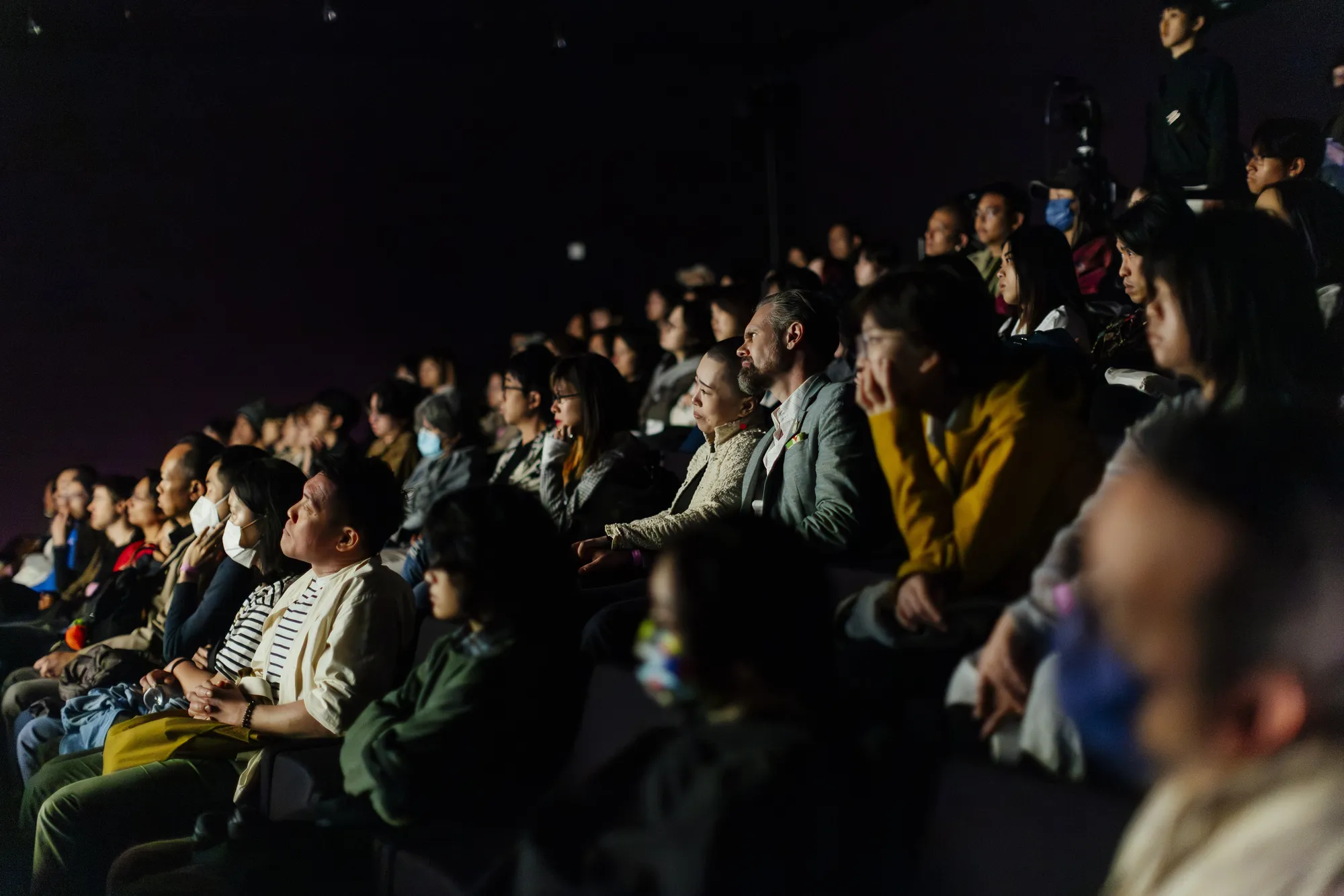
Photo: Jeff Cheng Tsz Fung
On the morning of 7 February, M+ was engulfed in a cacophony of screams and voices, treating visitors to an unsolicited wake-up call. This was courtesy of artist Samuel Swope who showcased his performance Aeolian Rider (2025). Seated in an armchair in what appeared to be a standard living room, Swope faced a wall of industrial blinds set at mid-ceiling height. Using a remote, Swope controlled which blinds and panels opened and closed, revealing industrial fans on full blast, voices (and glimpses of figures) in varying forms: a continuous anguished shriek; a soprano, baritone, and tenor crescendoing and receding in volume; a rapper accelerating his verses as the performance progressed; and the high-hitting notes of a Cantonese opera singer. Adding to the milieu, Swope joined in screaming, unleashing a suppressed angst. Through a controlled yet unbridled act, Swope momentarily unveiled the raw emotions we tend to stifle.
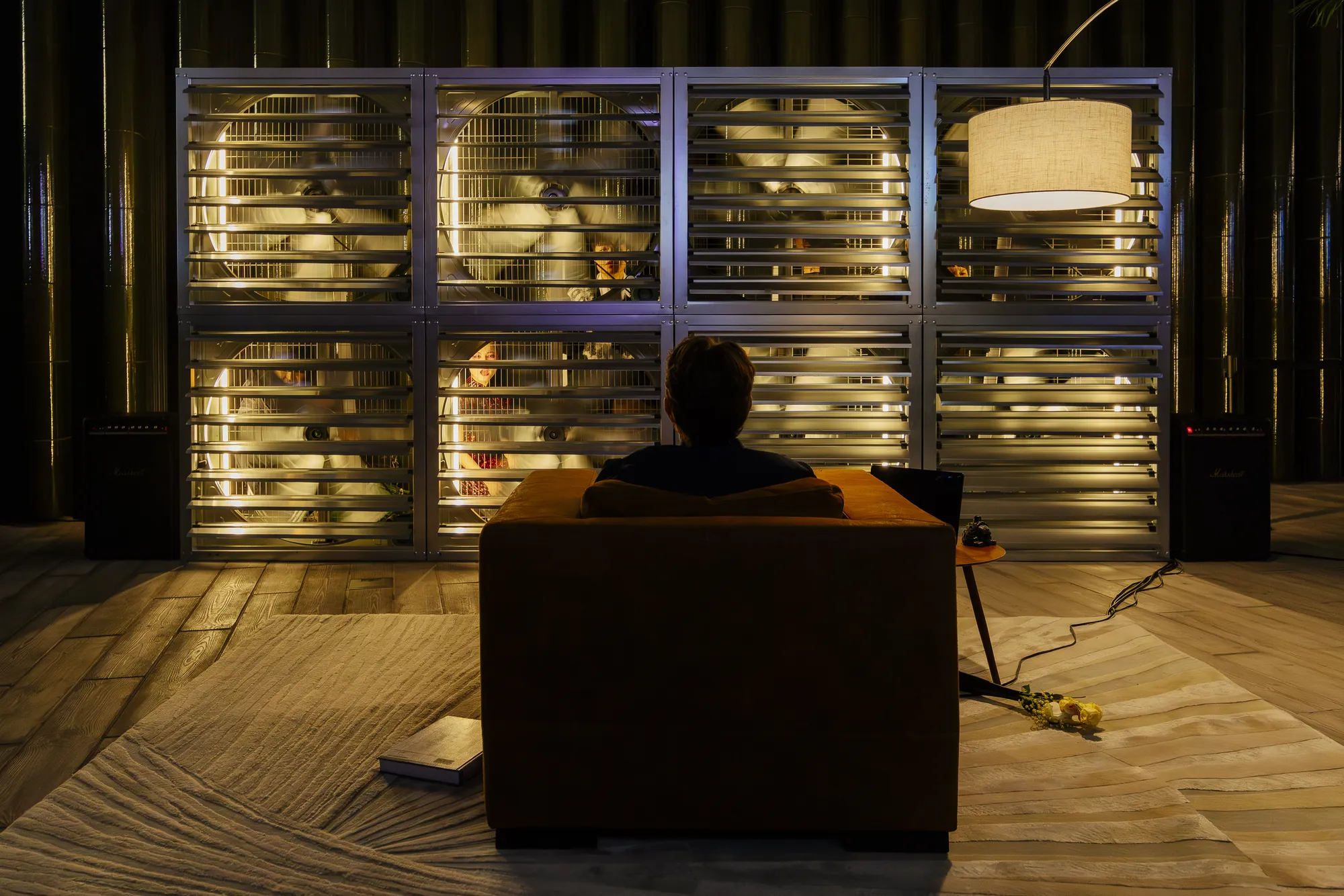
Aeolian Rider (2025) by Samuel Swope. Photo: Jeff Cheng Tsz Fung
Aeolian Rider was part of Avant Garde Now: Hidden Spaces—a day-long event featuring screenings, performances, and discussions with a select group of artists who rethink the idea of space. Along with Swope, He Zike, YoungEun Kim, and Lee Kai Chung reveal ideas of hidden spaces in their practice, often through shedding light on obscured narratives across history, politics, and contemporary culture.
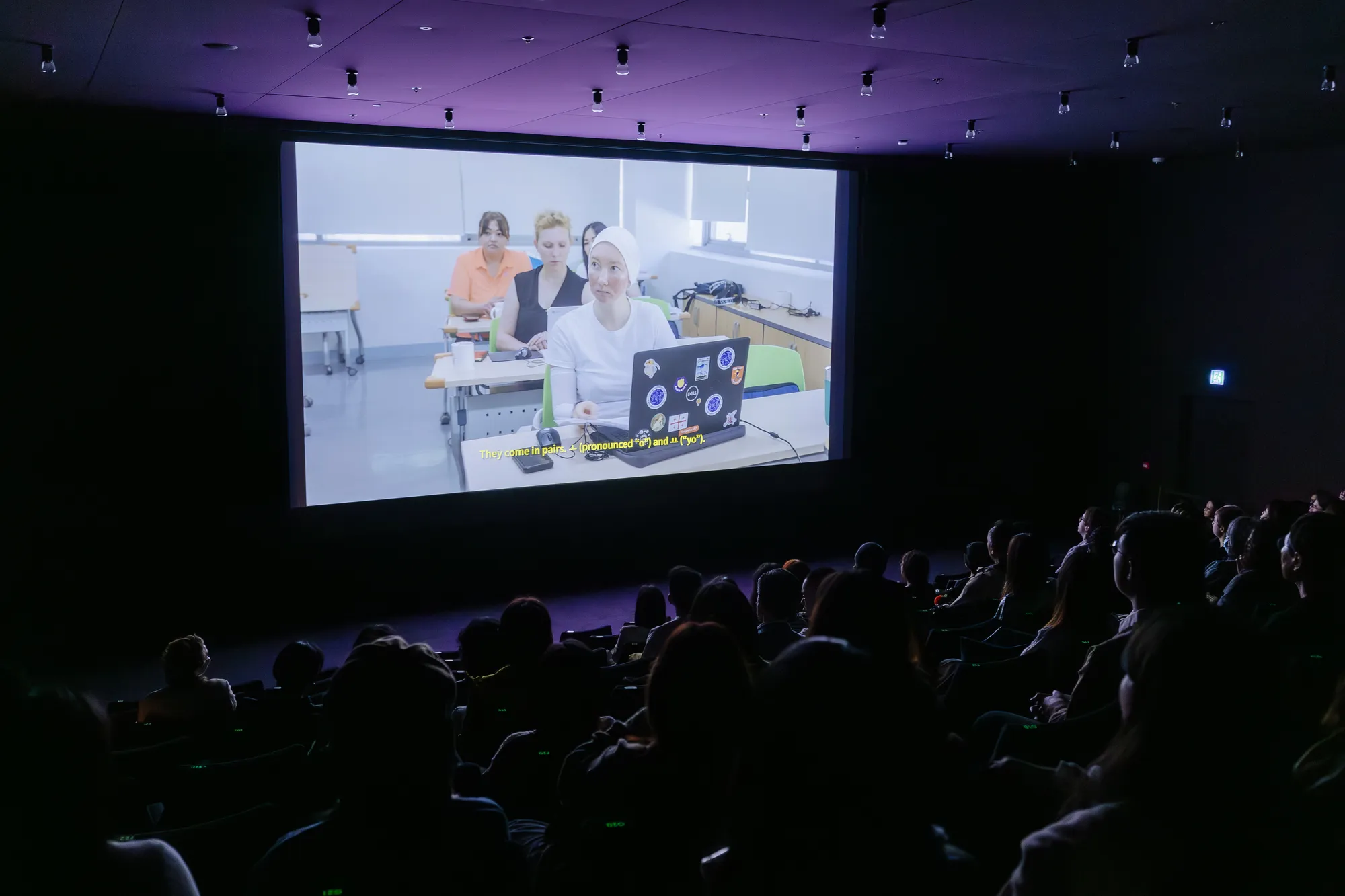
Listening Guests (2025) by YoungEun Kim. Photo: Jeff Cheng Tsz Fung
While Swope uses sound as an expressive medium and form of release, South Korean artist YoungEun Kim approaches sound and listening as cultural constructs as much as a material or sensory experience. In the film Listening Guests (2025), she reveals the experiences of Korean migrant communities in Los Angeles and those who are a part of the Koryo Saram (Korean from the former Soviet Union who were expelled to Central Asia), which she characterises as an act of “diasporic listening”. Here, pronunciations, accents and vocabulary are sonic cues. Just as Korean assumes a new form when spoken with a Russian or Central Asian accent, Russian also becomes altered when spoken with a Korean accent.
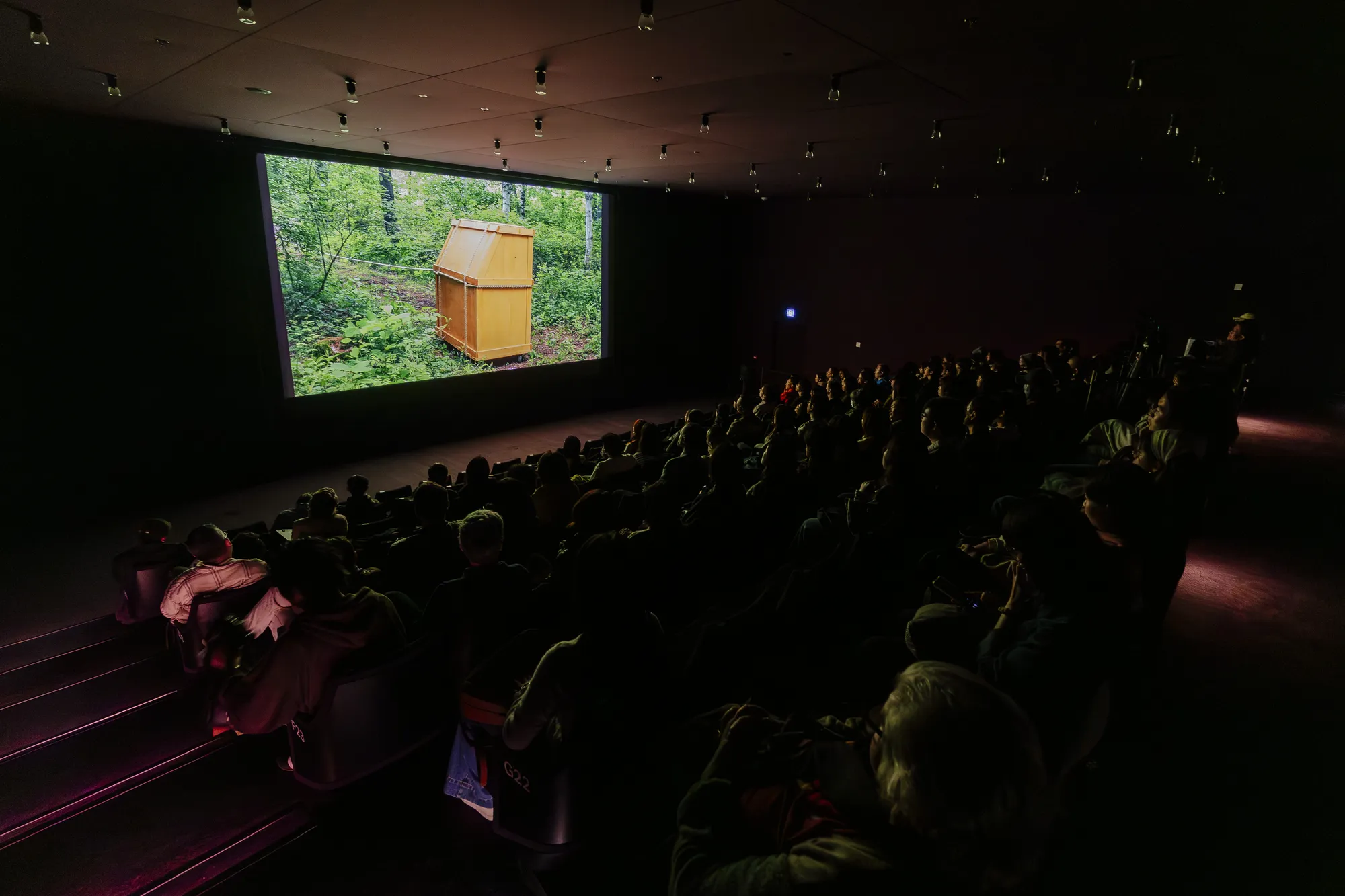
Brilliant A (2022) by YoungEun Kim. Photo: Jeff Cheng Tsz Fung
“Traditionally, the accent signals a deficiency or excessiveness and becomes a source of discrimination or stigmatisation,” the artist says, also highlighting its alternative indication—that it can mark belonging to a niche or subsect. “I almost interpret it as an expertise in a cultural area, or a kind of knowledge that people who are from the same place hold.” In deconstructing these markers, the artist reveals experiences which might otherwise go unheard - literally. Hidden spaces harbour the unheard, as much as they do the unseen. For Kim, in this age of constant visual stimulation, sound itself has become a hidden medium, and listening a quietly disappearing act.
Similar transformations are visualised in Brilliant A (2022), in which Kim recreates the physical trajectory of the first piano that came to Korea and forever altered Korean classical music. The large, wrapped up piano is lugged and dragged around various parts of the South Korean landscape, from rocky beach shores to dirt roads. Given its rough journey, one can only assume that its sound might now be different, but what Kim reveals is how its arrival disrupted traditional Korean music, completely changing the way Koreans consume music. Later in the film, it becomes known that the piano introduced the now-standard 440Hz tuning frequency used for most Western instruments. The standardisation of certain aural registers was a result of Western colonisation, which leads Kim to posit how research into the unexplored areas of the past can help contextualise our current-day aural experience.
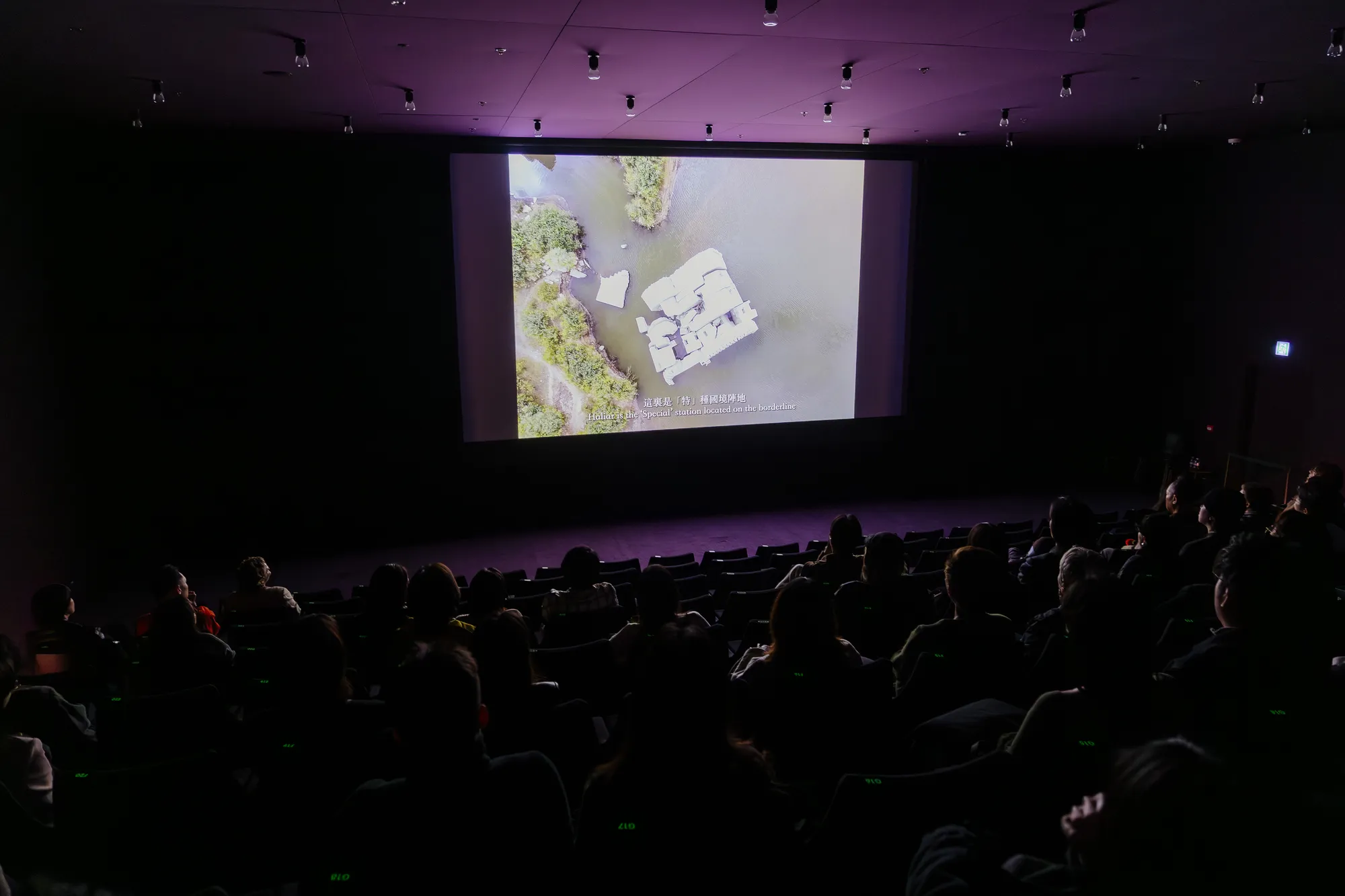
As Below, So Above (2023) by Lee Kai Chung. Photo: Jeff Cheng Tsz Fung
London-based Hong Kong artist, Lee Kai Chung also unearths the past to comprehend the present, but uses fiction to illuminate gaps in established historical narratives, particularly those pertaining to colonial influence in East Asia. In his film As Below, So Above (2023), set during WWII, the artist depicts a Japanese soldier and a Shin Buddhist militant hiding out in a vast underground bunker complex, near the northeast China–Soviet Union border. While their shared entrapment brings them closer, it also emphasises the psychological effects of isolation—writing on the walls, talking to themselves, and shaving their heads—yet despite these signs they are too afraid to escape. Lee explicitly holds up a historical mirror to his (and others’) recent experiences of confinement during the pandemic lockdowns and quarantines.
Oscillating between fiction, historical narrative, and the artist’s personal experience, the film is grounded in Lee’s travels across northern China and primary materials he encountered there, such as memoirs and journals written by soldiers who fought in the Second World War. The artist journeyed along railways near the borders, built by the Russians and Japanese, and came across what he terms “war infrastructure”—underground bunkers and fortresses, many of which are penetrating or embedded in mountains, revealing hidden spaces and systems that entrap us. “It’s the infrastructure that prevents you from going outside,” Lee says, referring both to the invisible, intangible but ever-present structures in our minds and to the material systems on which we rely.
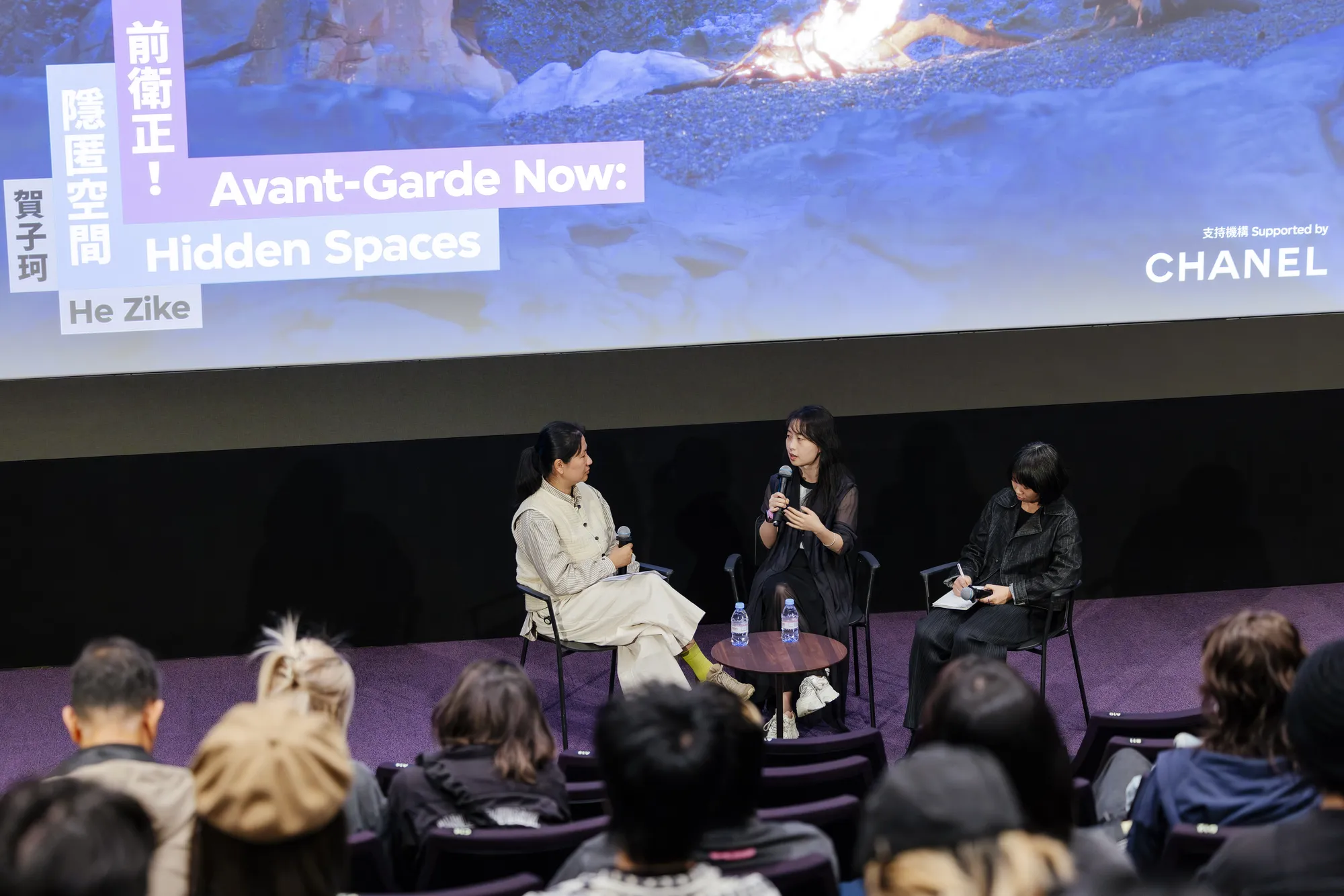
Post-screening talk for Random Access (2023) by He Zike. Photo: Jeff Cheng Tsz Fung
He Zike takes us on a dystopian journey unmasking digital infrastructure in and around her hometown of Guiyang, a cavernous, mountainous, cloudy landscape under which China’s data centres are hidden. “They aren’t visible and the public can’t access them,” He says of the facilities, many of which she notes serve giant tech companies such as Huawei and Tencent. “We wanted to know more about the land and possible ecological crises around it which might have an impact on these tech projects,” the artist adds, remarking on how these centres have transformed the lives of the city’s residents.
He’s film Random Access (2023), a loosely sci-fi inspired film, documents the consequences of rapid technological and urban transformation in Guiyang through a conversation between a taxi driver and a passenger who become lost on a highway after a data centre crashes and leaves their city in disarray. Their discussion draws obvious but topical connections between climate, memory, and data storage using a unifying symbol: the cloud. The title also references the computer term ‘random access memory’, or ‘RAM’, a form of digital memory that reads and writes data and provides fast access to stored information, a parallel He uses to reflect on how humans process memory. Through her practice, He makes clear that obscuring is intrinsic to a cloud’s function, both natural and digital, a concept that can be applied to the fallibilities we sometimes overlook in accessing our own memory and technology.
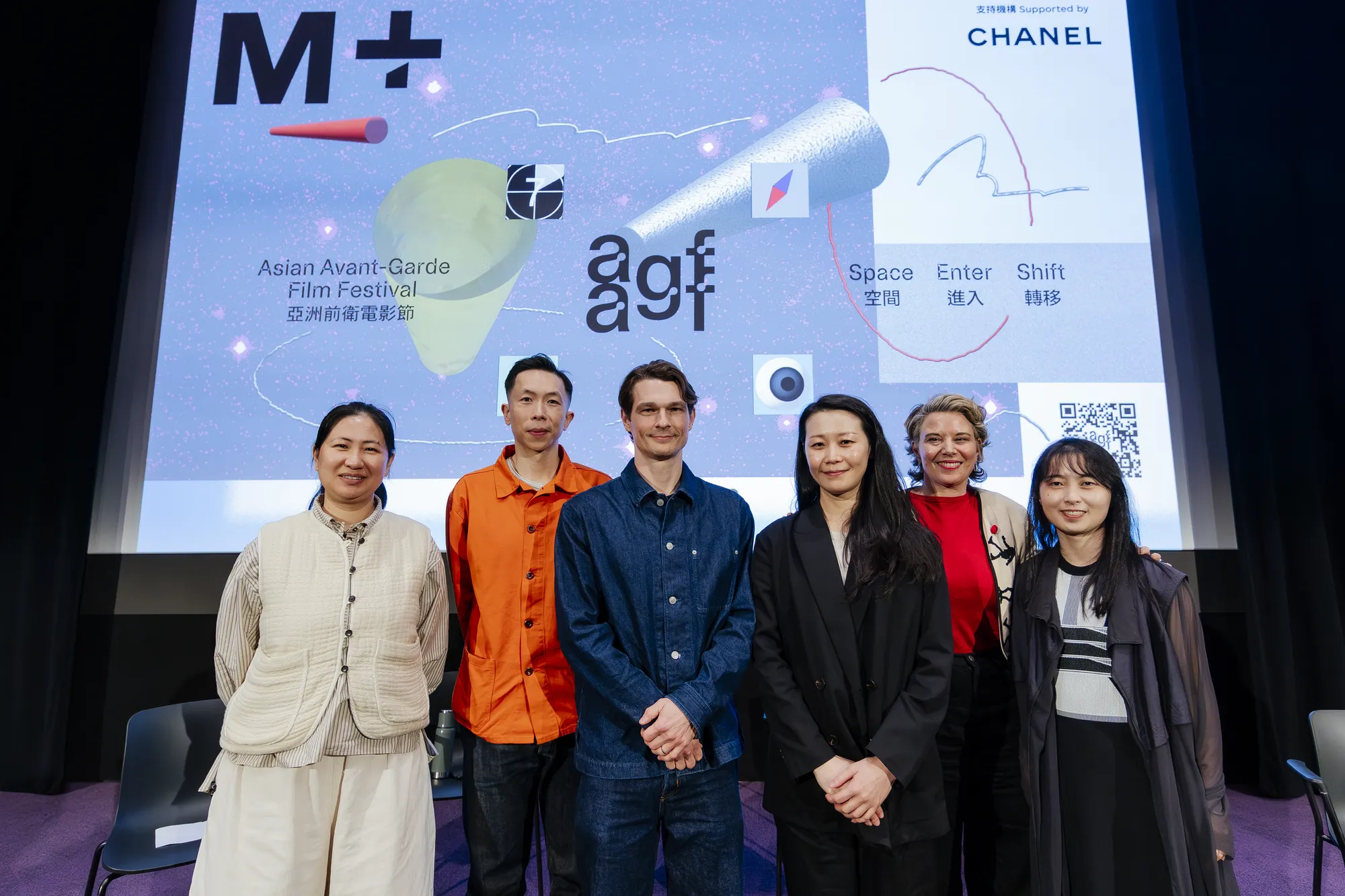
Kate Gu (M+), Lee Kai Chung, Samuel Swope, YoungEun Kim, Ulanda Blair (M+), He Zike. Photo: Jeff Cheng Tsz Fung
The idea of hidden digital processes brings us back to Swope’s hair-raising performance, during which real-time data was captured from the fans’ movements and digitally synthesised into a sound piece that played alongside the vocalists. None of this was visible to the audience, but viscerally felt, as most hidden spaces are.
Rather than simply identifying all these hidden spaces (as we know they exist) perhaps it is more relevant to ask why they are significant. During the concluding artist panel, Swope asked: if we reveal what is hidden, are we only concealing something else? Every narrative we present, and every narrative presented to us, is edited: events, ideas, thoughts, and details are deliberately included or excluded. What is excluded, and why, is what inhabits those hidden spaces.
A day spent at Avant-Garde Now: Hidden Spaces revealed to me that hidden spaces are where transformation transpires; they are sites that bear marks of change. For Swope, they were the cathartic release of primal emotions and the shifting balance between control and freedom. For Kim, they are the subtle changes that accrue through movement and translation; whether through the sound of Korean spoken by the Koryo Saram, or the implications for Korean music when Western classical music was introduced to the country. In Lee’s work, they are the psychological traumas inflicted by invisible governing systems. For He, they are the technological conversions from the material to the digital that have resulted in massive transformations of her hometown and society at large. For the sake of future posterity, it is significant to document how and why these changes occur, because they mark what was and what is.
Aaina Bhargava is a Hong Kong based arts and culture journalist who regularly contributes to art publications such as Art Forum, Art Review, The Art Newspaper, Frieze Magazine, and Ocula. She has also been published in the Financial Times, Dazed Middle East, and South China Morning Post. She specialises in identifying topical issues and charting growing trends across creative disciplines; visual arts, music, design, and fashion in Asia and around the world, and in-depth artist profiles. She was the former Arts & Culture Editor for Tatler Asia, and continually seeks to create meaningful editorial content, covering cultural developments through a relevant global perspective.